

So, you're wondering about junior golfers and their putting. It's a common question for parents and coaches alike: How many putts per round is good for junior golfers? While there's no single magic number that fits every young player, understanding typical ranges and focusing on improvement can make a big difference. Let's break down what makes a good putt count for the little ones just starting out or even those looking to get more serious about the game.
Key Takeaways
For junior golfers, aiming for around 30-40 putts per round is a reasonable starting point, depending on their age and skill level.
Reducing three-putts is often more impactful for juniors than chasing a specific low putt count.
Focusing on accuracy and pace on the greens, even on short putts, is vital for improvement.
As juniors get more serious, considering club fittings and course management strategies can help lower their putt counts.
Consistent practice, especially on putting drills, is the best way for juniors to improve their overall putt count over time.
The Magical Number Of Putts: What's The Goal?

Alright, let's talk about the part of golf that separates the weekend warriors from the folks who actually know what they're doing: putting. Forget those booming drives that land in the next zip code; the real magic, the stuff that fills your wallet (or at least your scorecard with pride), happens on the green. It’s where you can turn a potential disaster into a respectable par, or worse, a triple bogey. So, what's the golden number we're all chasing when we get within spitting distance of the hole?
Putting: The Real Money Maker (Not Driving!)
Seriously, have you ever heard anyone say, "Wow, that drive was amazing!" and then immediately follow it up with, "...but they three-putted three times?" Probably not. The old saying "drive for show, putt for dough" isn't just some catchy phrase; it's golf gospel. You can hit the ball a mile, but if you can't get it in the hole in a reasonable number of strokes, all that power is just… well, a lot of walking. For junior golfers, understanding this early is a game-changer. It shifts the focus from just hitting it far to actually scoring.
Decoding The Green: Accuracy And Pace Are Key
So, you've navigated the fairway, dodged the sand traps, and finally landed on the green. Now what? It's time to become a green detective. You've got two main suspects to interrogate: accuracy and pace. Hitting it straight is great, but if it's got the speed of a sleepy snail, it's not going to get there. Too fast, and you might end up in the parking lot. Reading the green isn't just about looking at it; it's about feeling the slope, understanding how the grass is growing, and predicting the ball's journey. It’s like predicting the weather, but with more dimples.
Short Putts: Don't Get Cocky!
Ah, the two-footer. It looks so innocent, so easy. You've probably sunk hundreds of these in practice, right? But suddenly, with everyone watching, that little putt can feel like a mile-long snake. The biggest mistake here? Getting lazy. You might think, "It's just a tap-in," and forget your pre-shot routine. That routine, the one you use for the 30-footers, is just as important for the two-footers. It keeps your mind focused and your stroke consistent. Never underestimate the power of a good routine, even for the shortest of putts.
The goal isn't just to get the ball in the hole; it's to get it in the hole with a consistent, repeatable stroke that you can trust under pressure. For juniors, building this habit now will pay dividends for years to come.
Beyond The Scorecard: What's A Good Putt Count?
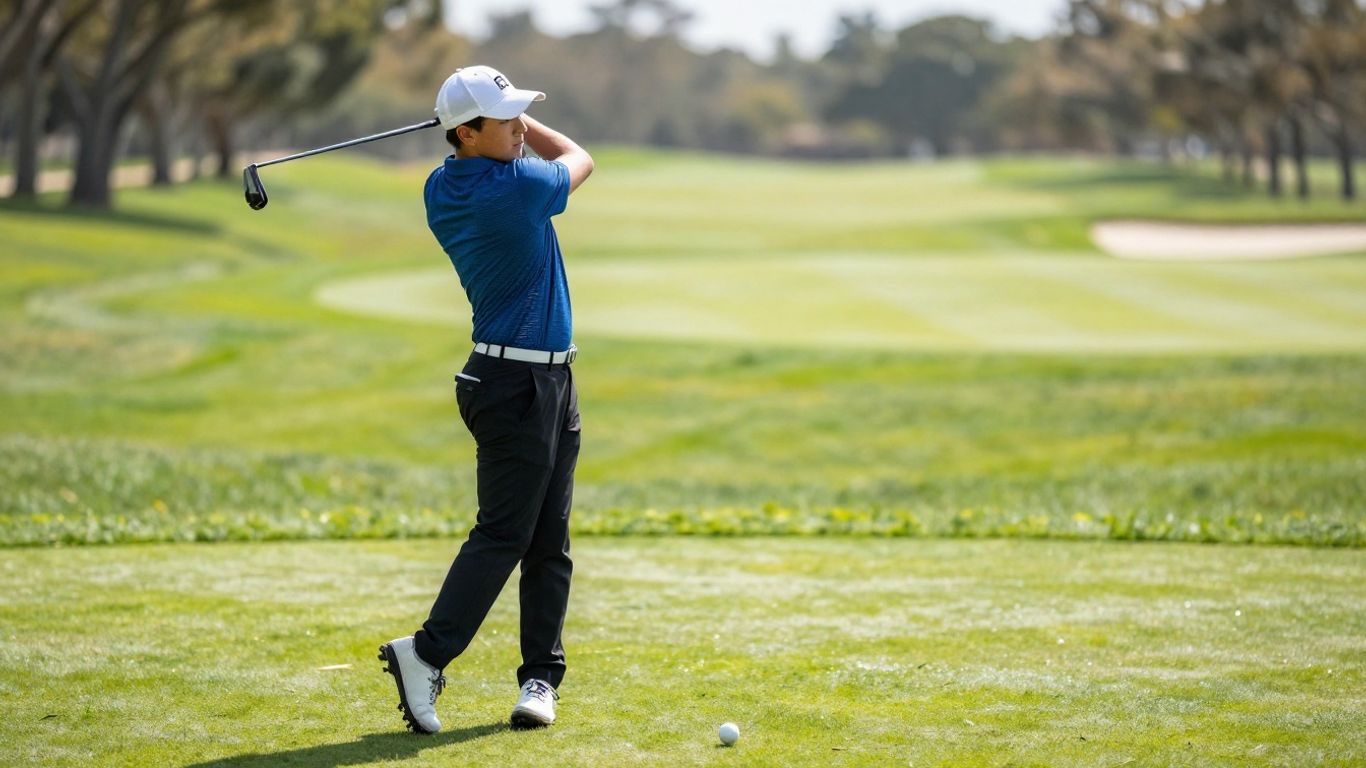
Alright, let's talk putts. We all know the saying, "Drive for show, putt for dough." While it sounds catchy, it's actually pretty spot-on. You can hit the ball a mile, but if you can't get it in the hole, all that power is just for bragging rights. So, what's the magic number? Stop Blaming Your Putting: What the Data Actually Shows is a good place to start, because the numbers can be surprisingly revealing.
The 15-Handicap's Putting Predicament
If you're hovering around a 15 handicap, you're probably not losing sleep over your driving. You're likely getting the ball on the green, but then... the putting starts. Data suggests that a 15-handicapper might average around 35 putts per round. That might sound like a lot, and honestly, it feels like a lot when you're out there. It means you're likely leaving yourself with some longer second putts, and those add up faster than you can say "three-putt."
A 10-Handicapper's Putt Prowess
Now, let's look at the 10-handicapper. These golfers are generally a bit more dialed in on the greens. A common benchmark for a 10-handicap is around 33 putts per round. See the difference? That's two putts saved per 18 holes, which can make a huge difference in your score. It's not about being a miracle worker on every putt, but about consistently getting it closer and making more of those mid-range putts.
Three-Putt Avoidance: A Statistic Worth Chasing
Forget just counting total putts for a second. Let's talk about avoiding the dreaded three-putt. This is a stat that really separates the good from the... well, the ones who are still working on it. For a 15-handicap, you might see around 2.5 to 3.3 three-putts per round. For a 10-handicap, that number drops significantly, often below 2. The goal here isn't necessarily to eliminate them entirely (because let's be real, golf happens), but to drastically reduce them. Think of it this way:
Every three-putt is a potential bogey or worse.
Avoiding one three-putt can save you a stroke, sometimes two.
Focusing on this stat helps you manage your expectations on longer putts – sometimes, just getting it close for a tap-in is the smart play.
The biggest takeaway here is that while driving gets all the glory, your putting is where you can make the most significant score improvements, especially if you're not yet a single-digit handicap. Don't get discouraged by the numbers; use them as a guide to know where to focus your practice time.
Junior Golfers And Their Putting Journey
Are Junior Clubs A Big Deal?
So, you've got a little one showing interest in golf. Awesome! The first question that pops into many parents' heads is about the clubs. Do they need the fancy, super-light, perfectly fitted junior set right away? Honestly, probably not. If your kid is just starting out, maybe even just whacking a plastic ball around the yard, a basic set or even a single club designed for younger players is usually fine. Think of it like this: you wouldn't buy a race car for a toddler learning to walk, right? The goal is to get them comfortable and having fun. As they get more serious, then you can start thinking about more specialized gear. For now, focus on the joy of the game. Lots of recreational golf participation happens in the US, and it's a great way for kids to get active over 82 million rounds played.
When Does A Junior Golfer Need A Fitting?
This is where things get a bit more serious. If your junior golfer is starting to compete, aiming for tournaments, or really wants to shave strokes off their score, then a fitting might be a good idea. But if they're just playing for fun on the weekends, a fitting is probably overkill. Kids grow like weeds, and what fits them today might be too short next year. Unless they're showing a real dedication to improving their game, especially their putting, hold off on the expensive fittings. Let them grow into the game first.
Course Management: It's Not Just About Whacking It Far
This is a big one, and it applies to juniors just as much as adults. We all see the pros on TV, bombing drives. But for most golfers, especially juniors, playing smart is way more important than playing long. Sometimes, hitting a shorter, more accurate shot is the better play. It might mean using a different club off the tee or thinking about where you want to land the ball on the fairway. It's about making the game easier for yourself. Think about avoiding trouble spots on the course. A good course management strategy can save more strokes than a few extra yards off the tee.
Here's a quick rundown of smart plays:
Avoid the hazards: Water, sand, and out-of-bounds are stroke-killers.
Play to your strengths: If you're a great putter but a wild driver, maybe lay back a bit off the tee.
Know the hole: Understand the best way to play each hole before you even step up to it.
For junior golfers, learning to manage the course is as important as learning to swing. It's about making smart decisions that lead to lower scores and more enjoyment. Don't just hit it as hard as you can; think about where you're hitting it and why.
When we look at Junior Golf Putting Stats vs PGA Tour: The Truth, it's clear that juniors have a lot of room to grow. While PGA Tour pros might average around 28 putts per round, a junior golfer might be closer to 35-40 or even more. The key is to focus on reducing those three-putts. That's often the biggest difference-maker for younger players.
Putting It All Together: How Many Putts Is Good?
So, we've talked about the importance of putting, how to read greens, and even how to handle those tricky short putts. But the big question remains: How Many Putts Per Round Is Good for Junior Golfers? It's not as simple as just saying "under 30," though that's a nice thought. Let's break it down.
The Data Doesn't Lie (Usually)
Golf stats can be a bit like weather forecasts – sometimes they're spot on, and sometimes they make you want to question everything. But generally, looking at what different handicap levels achieve can give us a good ballpark. For instance, a 15-handicap golfer might average around 35 putts per round. Now, that might sound like a lot, but remember, this includes everything from tap-ins to those long bombs from across the green. A 10-handicap golfer, on the other hand, is often looking at closer to 33 putts per round. See how that number starts to drop? This shows that even a few putts saved can make a big difference in your overall score. It’s a good reminder that putting performance significantly differs across handicap levels.
Chasing The 30s: A Realistic Putt Target
For junior golfers, aiming for the low 30s is a solid, achievable goal. It's not about being perfect, but about being consistently good. Think about it: if you can get your average down to, say, 32 or 33 putts per round, you're playing at a level comparable to a decent amateur. That's something to be proud of!
Here's a little something to aim for:
18 Putts or Less on the Front Nine: This means averaging two putts per hole. Ambitious, but possible!
15 Putts or Less on the Back Nine: Aiming for slightly fewer here, maybe a few more pars or even birdies.
Total: 33 Putts or Less for the Round: This is your sweet spot.
Three-Putt Avoidance: The Junior Golfer's Nemesis
If there's one thing that can really sabotage a junior golfer's score, it's the dreaded three-putt. It's like a penalty stroke you didn't need. While aiming for a specific total putt count is great, actively working to avoid three-putts is even more impactful. For many junior golfers, reducing three-putts from, say, 3-4 per round down to 1-2 per round can shave off strokes faster than anything else. It’s about making smart decisions on the green, like not trying to hole out every long putt, but rather focusing on getting it close for an easy second putt. This strategy can really help you improve your putting.
The biggest gains for junior golfers often come not from hitting the ball further, but from getting it into the hole in fewer strokes once they're on the green. Focusing on consistent putting and minimizing those costly three-putts is key to lowering scores.
The Art Of The Putt: More Than Just Rolling It
Reading Greens: It's Not Rocket Science (But It Can Feel Like It)
So, you've managed to get your ball onto the green. High five! But now comes the part that separates the weekend warriors from the folks who actually know what they're doing: the putt. It’s not just about whacking it towards the hole and hoping for the best. You've got to read the green, which sounds fancy, but really just means figuring out how the ground's going to mess with your ball's path. Is it sloping left? Right? Is it faster or slower than a sloth on vacation? These are the million-dollar questions.
Think of it like this: you're not just rolling a ball; you're predicting its destiny. You need to get two things right: accuracy (aiming at the right spot) and pace (hitting it with the right amount of oomph). For junior golfers, this might mean looking at the putt from behind the ball and then from the side. See how the land dips and rises? That's your cue. On a flat green, it's simpler – aim for the cup. But when those slopes show up, you have to to anticipate how the ball will curve and adjust your aim accordingly. It's about understanding the subtle undulations and how they'll influence the ball's trajectory. You're not just hitting a putt; you're guiding it through a miniature landscape. It's about developing that touch and understanding the subtle nuances of the green's surface to truly get a feel for the break. It’s like trying to guess how much your dog will shed in a month – a lot of educated guessing involved.
Long Putts: Don't Aim For The Moon, Aim For The Board
Ah, the long putt. The one that stretches out before you like a desert highway. Most folks, especially juniors who are still figuring things out, get a bit antsy and just want to ram it straight at the hole. But here's a little secret: aiming for the hole from 30 feet away is often a recipe for disaster. Why? Because you're probably going to hit it too hard, and suddenly you're staring down a three-putt. Instead, think about getting it close. Imagine a small board around the hole, maybe a couple of feet in diameter. Your goal is to get your ball to land on that board. If it goes in? Awesome! If not, you've left yourself a tap-in for your next putt, which is way better than a long, nerve-wracking comeback putt.
Here's a simple strategy for those longer treks:
Visualize the Speed: Don't just see the hole. See the ball rolling smoothly and stopping within a few feet of it.
Pick a Landing Spot: Aim for a specific blade of grass or a tiny imperfection on the green that's about halfway to the hole. This helps with your line.
Focus on the Stroke: Make a smooth, consistent stroke. Think pendulum, not hammer.
The Importance Of A Pre-Shot Routine (Even For Two-Footers)
You might think a pre-shot routine is just for the pros on TV, something they do before every single shot to look all serious. But honestly, even for a two-footer that looks easier than breathing, having a routine is gold. It helps you focus, calms those jitters, and makes sure you’re actually thinking about the putt instead of just getting it over with.
What does a routine look like for a junior golfer?
Walk the Line: Take a few steps to see the putt from different angles.
Visualize the Roll: See the ball going into the hole. Seriously, picture it.
Take Your Stance: Get comfortable, align your putter face, and take a practice stroke or two to feel the speed.
Commit and Go: Once you've done your routine, pull the trigger. No second-guessing!
Even the shortest putts deserve respect. A little focus and a consistent routine can turn a potential bogey into a par, and that's a big deal for any golfer, especially a junior one still building confidence on the greens.
So, What's the Putt-tastic Verdict?
Alright, junior golfers and their slightly-less-junior parents, we've talked a lot about putts. Remember, it's not about sinking every single one like a magic trick, but about getting better one putt at a time. Think of it like trying to teach your dog to fetch – sometimes it works, sometimes they just stare at you. The key is to keep practicing, maybe aim for fewer than, say, 35 putts a round if you're feeling fancy, but honestly, just getting better than last time is a win. Don't stress too much about the numbers; focus on having fun, learning the game, and maybe, just maybe, not three-putting too often. Now go forth and putt with purpose (or at least with a good chuckle)!
Frequently Asked Questions
What is a good number of putts for a junior golfer?
For junior golfers, aiming for around 30-35 putts per round is a great goal. Don't worry too much about the exact number when you're just starting out. The most important thing is to focus on getting better each time you play. As you practice and get more comfortable, that number will naturally go down.
Why is putting so important in golf?
They say 'drive for show, putt for dough' for a reason! While hitting the ball far is exciting, putting is where you actually score the most points. Even if you hit the ball perfectly onto the green, it doesn't count for much if it takes you too many tries to get it in the hole. Good putting helps you save strokes and lower your score.
How can juniors get better at reading greens?
Reading a green means figuring out how the slope of the grass will make your putt curve. For beginners, start by looking at the green from behind the ball and from the side. Imagine how the ball will roll. On flat greens, just focus on aiming straight and hitting it with the right speed. For sloped greens, pay extra attention to how the land dips and rises.
Should junior golfers worry about three-putts?
Absolutely! Three-putting, or taking three strokes to get the ball in the hole from the green, is something every golfer wants to avoid. For juniors, try to focus on making your first putt close to the hole and then making the second putt. Avoiding three-putts is a big step towards a better score.